

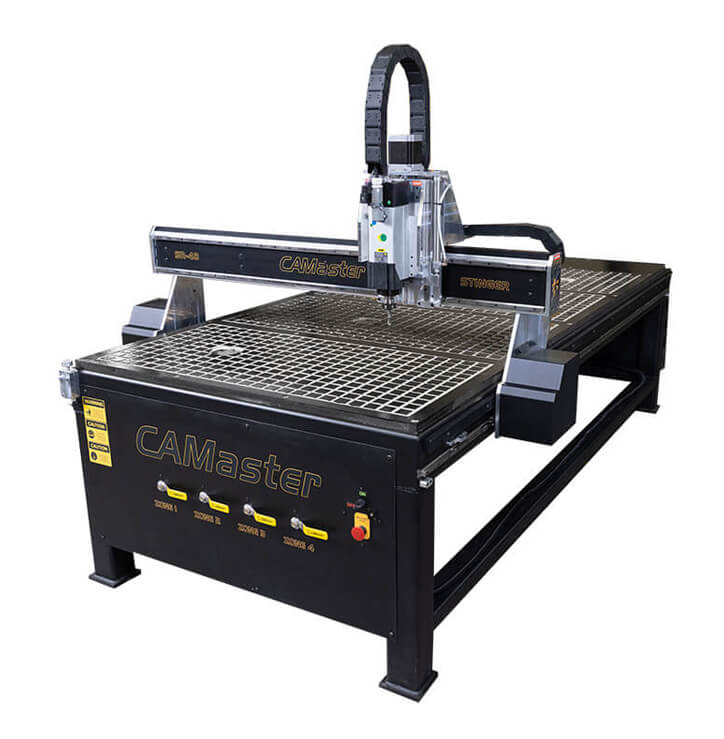
In today’s fast-paced manufacturing world, precision, speed, and automation are more than just advantages—they’re necessities. Enter the CNC router, a tool that has transformed how industries cut, shape, and finish materials. But not all routers are created equal. Investing in the best CNC router can revolutionize a business’s productivity and output quality. Let’s explore how and why.
What Is a CNC Router and Why It Matters
An industrial CNC router (Computer Numerical Control router) is a machine that uses computer programming to automate cutting, carving, and milling tasks. It works across various materials like wood, plastic, foam, aluminum, and even some metals. The core benefit lies in its automated precision—it produces consistent, detailed results that would be impossible or extremely time-consuming by hand.
For manufacturers, this means:
- Lower production errors
- Faster turnaround times
- Higher consistency across products
- Reduced reliance on manual labor
These factors make CNC routers essential tools in industries like furniture production, signage, aerospace, prototyping, and custom cabinetry.
Key Features That Define the Best CNC Router
When we talk about the best CNC router, we’re referring to machines that offer superior performance, durability, and user-friendly operation. Here are some essential features that define a top-tier machine:
-
High Precision and Repeatability
Precision is the heart of manufacturing. A high-quality CNC router will cut or engrave within tight tolerances, often measured in thousandths of an inch. The ability to repeat exact cuts without manual adjustment is vital for mass production.
-
Sturdy Construction
The best CNC routers are built from heavy-duty materials like steel or aluminum, which reduces vibrations and increases accuracy. A solid build ensures that the machine can handle heavy workloads and continuous operation.
-
Advanced Control Systems
Modern CNC routers come with powerful software and easy-to-use interfaces. These systems allow operators to upload designs, set tool paths, and monitor production in real-time. Touchscreen displays, remote diagnostics, and compatibility with CAD/CAM software are also common features in high-end machines.
-
Multi-Axis Movement
While basic CNC routers operate on three axes (X, Y, and Z), the best ones include additional axes for more complex cutting angles and deeper designs. A 4-axis or 5-axis router adds a new level of flexibility, especially for intricate or 3D projects.
-
Tool-Changing Capabilities
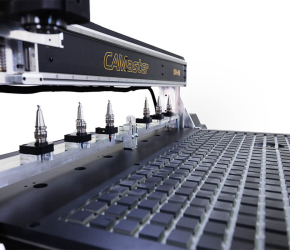
Automatic tool changers can drastically speed up the workflow. Instead of manually swapping bits or cutters, the machine does it on its own—saving time and reducing errors.
How the Best CNC Router Transforms Manufacturing
Improved Efficiency and Productivity
With the ability to run continuously and produce the same high-quality output every time, a top-tier CNC router can significantly boost a factory’s productivity. Complex jobs that once took hours now take minutes, freeing up time and labor for other tasks.
Lower Material Waste
Precision means less room for error, which in turn means fewer mistakes and less wasted material. Over time, this leads to considerable cost savings, especially in high-volume production.
Scalability and Flexibility
Whether you’re producing one prototype or thousands of units, the best CNC router adapts to your needs. This scalability allows businesses to take on more clients and expand their offerings without investing in additional machinery.
Competitive Advantage
Manufacturers that adopt high-end CNC technology often outpace competitors. They deliver higher-quality products, faster turnarounds, and lower costs—qualities that today’s customers demand.
Applications Across Industries
The best CNC routers aren’t limited to just one field. Their versatility makes them valuable in:
- Furniture and cabinetry – for detailed wood designs and joints
- Advertising and signage – for large, intricate cutouts and letters
- Automotive and aerospace – for lightweight composite parts
- Prototyping and R&D – for quick development of test models
- Education and training – for teaching modern fabrication techniques
Maintenance and Longevity
While high-end CNC routers may require a larger initial investment, their longevity and reduced maintenance make them cost-effective in the long run. Regular cleaning, lubrication, and occasional calibration are often all that’s needed to keep them running smoothly for years.
Conclusion: Precision Today for Success Tomorrow
The future of manufacturing lies in precision, automation, and smart technology. The best CNC router is not just a machine; it’s a strategic investment that opens the door to innovation, scalability, and superior product quality. For any manufacturer serious about growth and efficiency, it’s time to unlock the full potential of CNC precision power.